Choosing the Best Kayak Tie Down Straps for Safe Transport
Transporting a kayak is not as simple as tossing it on the roof and driving off. The boat is long, heavy in its own way, and exposed to wind forces that can shift it mid-trip. A good set of kayak tie down straps makes the difference between a relaxed launch and a white-knuckle ride. But not all straps work the same, and picking the wrong ones can lead to damage or even loss of the boat.
This article looks at what to expect from quality straps, what to avoid, and why the design details matter more than most people think. Whether you carry a touring boat, a recreational sit-on-top, or a lightweight fishing kayak, the principles are the same. The goal is a secure load that stays put without crushing the hull.
What Makes a Kayak Strap Different
A standard ratchet strap might seem fine for a kayak, but kayaks have special needs. The hull is hollow and can flex under pressure. Straps that work for lumber or furniture often have buckles that dig into the plastic or gel coat. And a typical ratchet can over-tighten easily, leaving stress marks or even cracks in the hull.
Kayak tie down straps are designed with wider webbing, usually at least one inch wide, and sometimes with protective sleeves or padding where the strap contacts the boat. The buckles or ratchets are positioned to avoid contact with the hull entirely. This is where a product like Strapinno kayak tie down straps stands out. The webbing lies flat, the ratchet mechanism retracts into itself to keep loose tails from flapping, and the strap stays clean and tangle-free even after repeated use.
Retractable Ratchets and Tangled Webbing
Anyone who has spent time on a boat ramp or in a parking lot strapping down a kayak knows the frustration of a tangled strap. The webbing twists, the ratchet gets jammed, and suddenly a simple job takes ten minutes. The newer retractable ratchet designs solve this by keeping the webbing under light tension inside the housing. You pull out only what you need, and the rest stays wound inside.
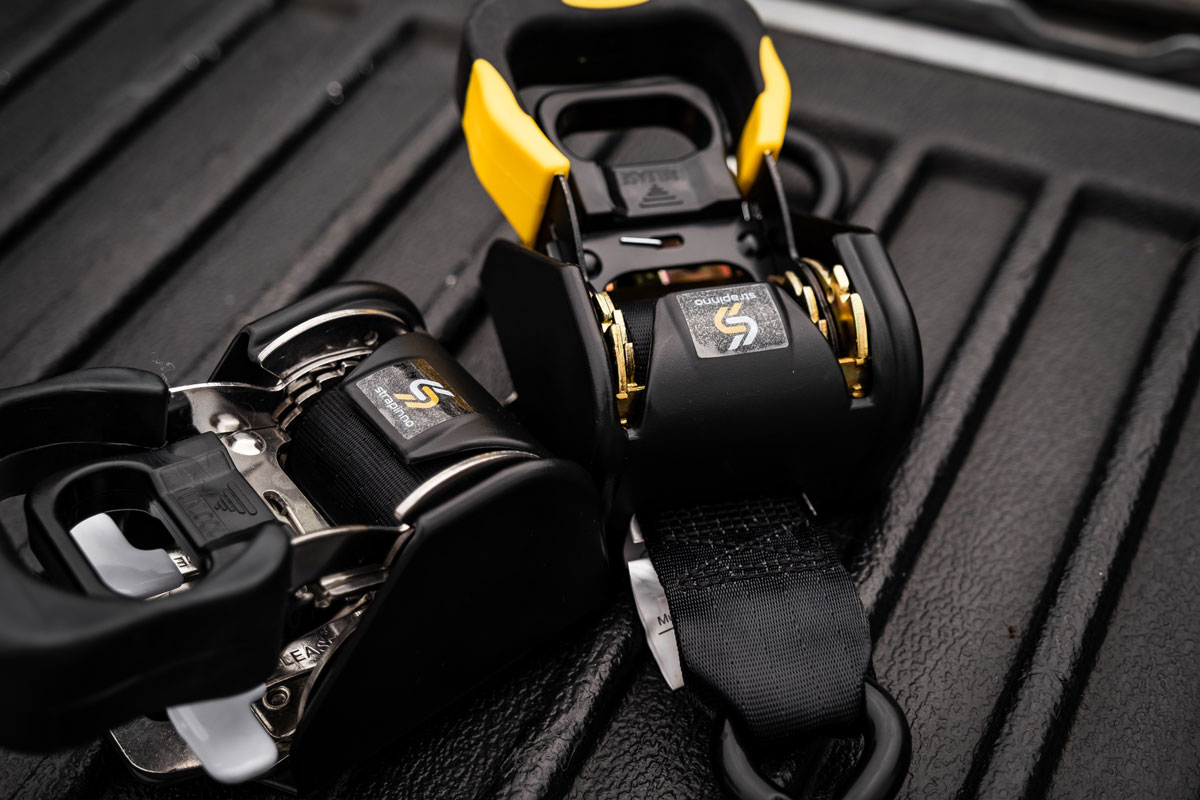
This is more than a convenience. A tangled strap that has to be untwisted on the side of the road is a safety risk. The retractable mechanism also prevents the loose end from whipping in the wind, which can damage the strap and scratch the car's paint. For kayak owners who load and unload frequently, this design is a real time-saver.
Cam Straps Versus Ratchet Straps for Kayaks
There is an ongoing debate among paddlers about whether cam straps or ratchet straps are better for kayaks. Cam straps work by threading the webbing through a cam buckle that pinches the strap. They are simple, lightweight, and less likely to over-tighten. But they rely on friction, and if the cam is not well made or the webbing gets wet, the strap can slip.
Ratchet straps give a positive lock. You can tension the webbing precisely and the ratchet holds until you release it. The risk with a standard ratchet is that it can be cranked too tight, which can deform a kayak hull or crack the plastic. A good ratchet strap for kayaks has a limited tension range or a mechanism that prevents over-tightening. The Strapinno kayak tie down straps use a ratchet that is easier to control, and the retractable feature means the webbing is always ready to use without tangles.
For most kayak owners, a ratchet strap with a smooth, controlled action is the better choice. It gives peace of mind on long highway drives and in windy conditions. A cam strap can work for short trips on calm roads, but it is not as reliable when the load is heavy or the weather turns.
How Many Straps Do You Really Need
Two straps are the minimum for a kayak, but three is better for longer boats or open-road trips. The first strap goes near the bow, the second near the stern. A third strap in the middle adds security and reduces bouncing. Each strap should be positioned to hold the kayak firmly against the roof rack or foam blocks without pinching the hull.

When you choose kayak tie down straps, look at the length. Most kayak carry setups need straps between twelve and sixteen feet long for a car roof. Longer straps are needed for truck beds or trailers. The webbing should be polyester, not polypropylene, because polyester resists UV damage and does not stretch as much over time.
Common Mistakes to Avoid
- Over-tightening the straps. A kayak hull can flex and crack if the straps are too tight. The straps should be snug enough to prevent movement, not so tight that the hull bulges between them.
- Letting straps rub against sharp edges. Kayaks have rails, handles, and sometimes rudder hardware that can cut into webbing. Use edge guards or position the straps away from metal parts.
- Ignoring the tail. A long loose tail of webbing flapping in the wind can fray and weaken. Retractable ratchets eliminate this problem by storing the excess inside the housing.
Maintenance and Care
Straps take a beating. Sun, salt water, road grime, and repeated tension cycles all wear them down. Rinse the straps with fresh water after every saltwater trip. Let them dry fully before storing, especially if the ratchet has internal parts that can corrode. Check the webbing for frayed edges or cuts. A damaged strap should be replaced immediately, not patched.
The ratchet mechanism should move smoothly. If it starts to stick or skip, clean it with a little fresh water and a brush. Do not oil it; oil attracts dirt and can make the problem worse. A well-maintained set of straps will last several seasons, while neglected ones can fail at the worst moment.
Why the Little Details Matter
The difference between a cheap strap and a good one often comes down to small design choices. The stitching on the webbing loops, the material of the ratchet housing, the shape of the release lever, the presence of a protective sleeve. These details determine whether the strap is easy to use one-handed or requires wrestling on a wet roof rack.
Strapinno has put effort into these details with their retractable ratchet design. The webbing feeds smoothly, the ratchet does not jam, and the whole unit is compact enough to store easily. For anyone who regularly transports a kayak, these are not luxuries. They are practical features that make the job faster and safer.
Final Thoughts
Kayak tie down straps are a small investment compared to the cost of the boat, but they are the single most important piece of gear for getting it to the water. Choosing the right straps means understanding the trade-offs between cam and ratchet, knowing how many straps to use, and paying attention to the quality of the webbing and hardware.
If you are in the market for new straps, look for retractable ratchet designs that prevent tangling and allow controlled tensioning. The Strapinno kayak tie down straps are a good example of what to look for. They keep the webbing clean and ready, they protect the hull from over-tightening, and they simplify the whole process of securing a load. A day on the water starts with a safe, stress-free drive, and the right straps make that happen.
 Facebook
 Instagram
 YouTube